
The drawing before the first cut
No. 001, the Solstice Table, is a round side table in black walnut, drawn in three sizes. This note covers the drawing for the 24-inch table.
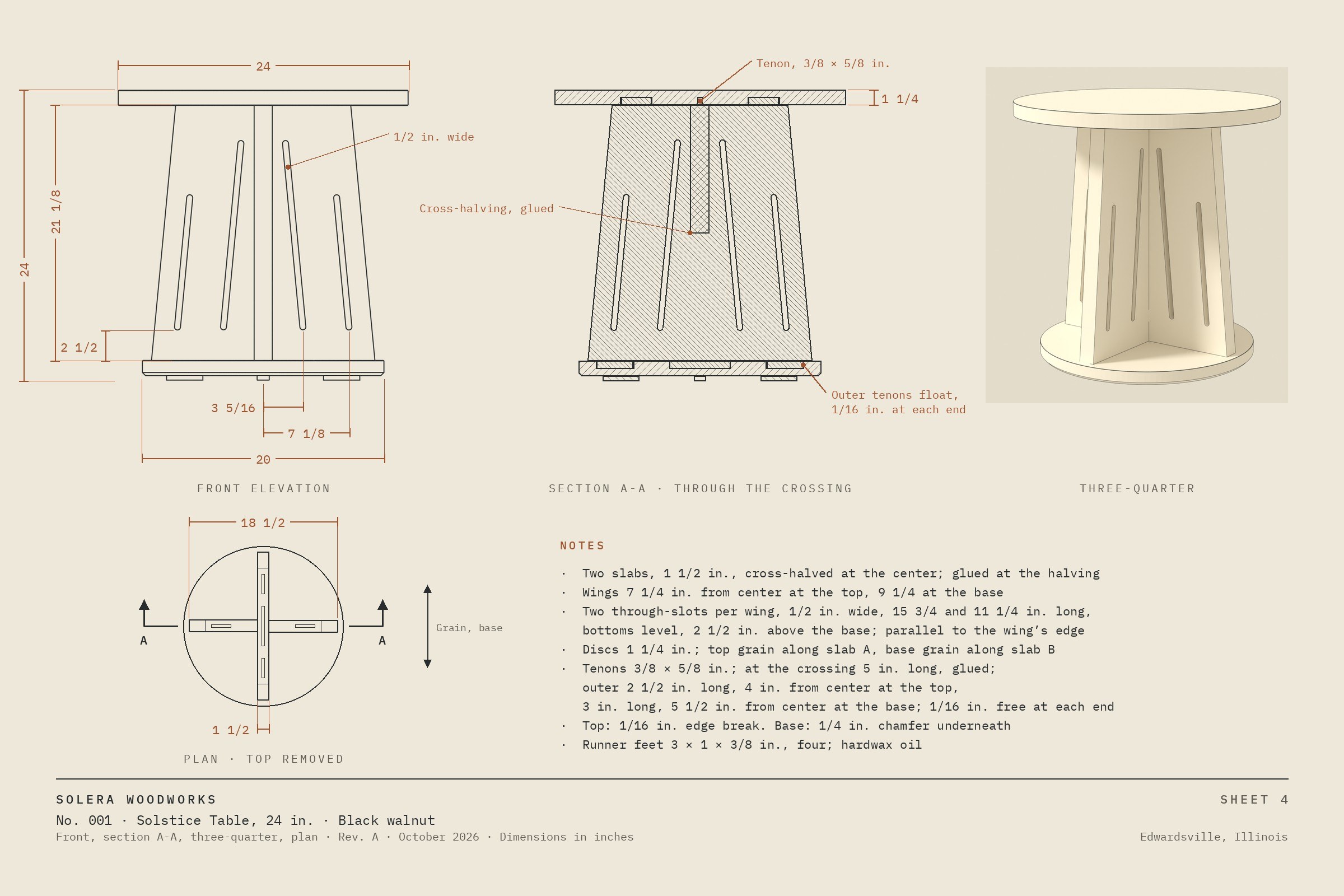
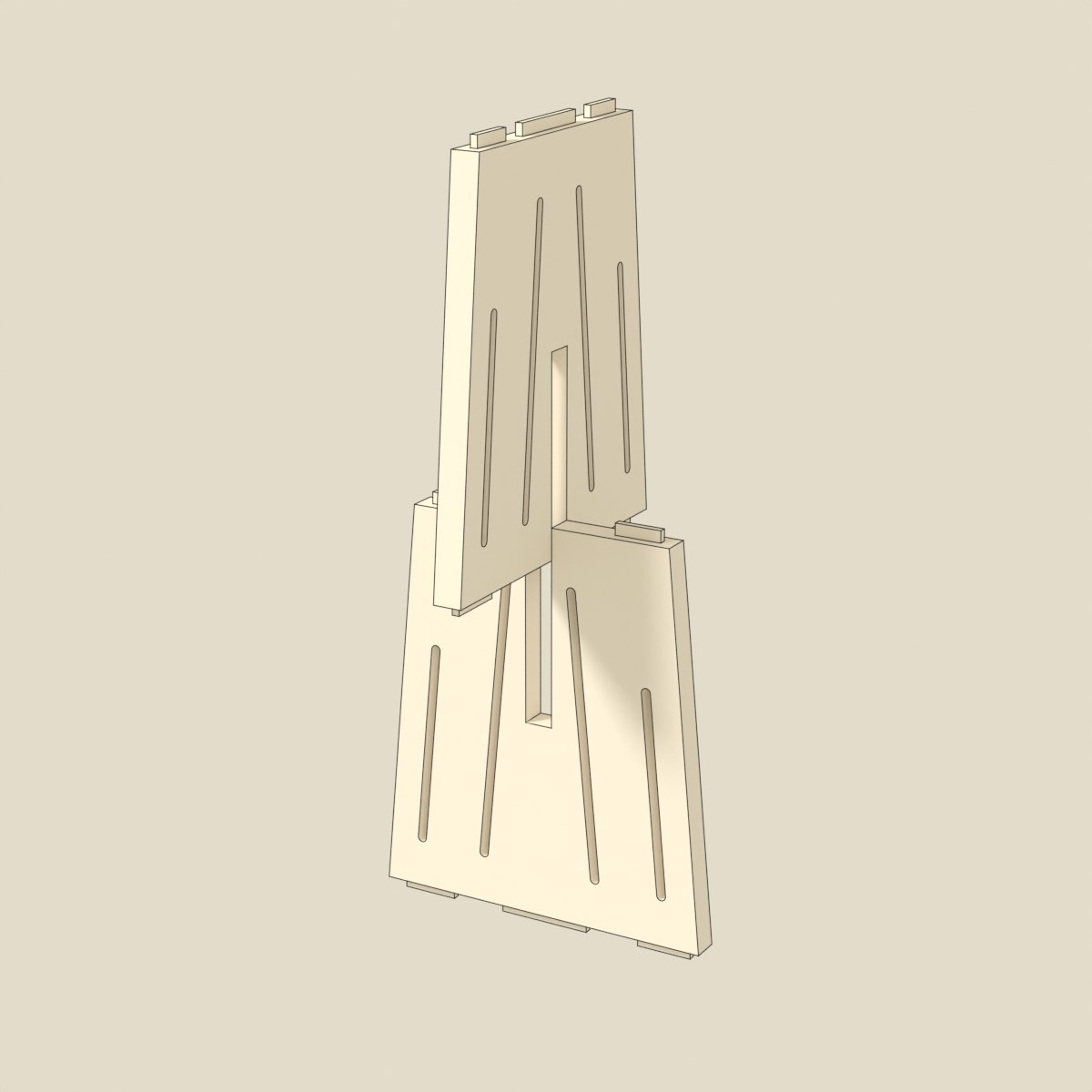
The top is a 24-inch disc of black walnut, and everything under it follows from one decision: two slabs cross-halved at the center into four legs, instead of a column or a frame. Cross-halved means each slab is notched to half its height where they cross, one from the top and one from the bottom, so they slide together and read as one piece from any side. There is no hardware in it. Each slab is tenoned into blind mortises in the base and the top, so no joint shows on the finished table. I fit it dry first, on camera, where you can see how it goes together.
The legs widen from 14 1/2 inches across at the top to 18 1/2 at the base, and each wing carries two through-slots 1/2 inch wide, parallel to its outer edge, their bottoms level. The slots are there for the light: they let it through a piece that would otherwise read as a block. The base is a 20-inch disc on four runner feet, 3 by 1 inches and 3/8 inch thick.
Walnut moves across its grain every season: the top, the base and each slab across its width. The top’s grain runs along slab A, so the top moves along slab B; the base’s grain runs along slab B, so the base moves along slab A. Each disc is glued in one place, the tenon at the crossing, and that tenon is on the slab that moves the same way: slab B in the top, slab A in the base. The outer tenons float, with 1/16 inch of room at each end of their mortises. The top gets a 1/16-inch edge break and the base a 1/4-inch chamfer underneath.
I will add the photographs and the hours here when the table is oiled.